
"MESView has enabled us to transform shop-floor data into real decisions, right when they matter."

Alejandro Alhambra García
Chief Information Officer




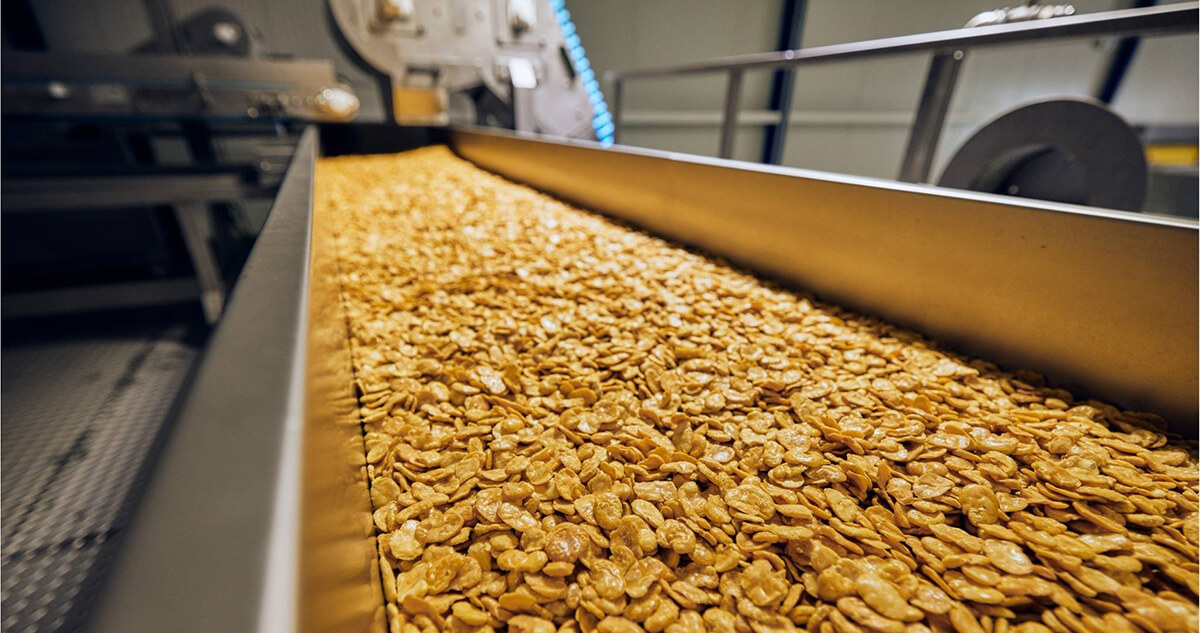


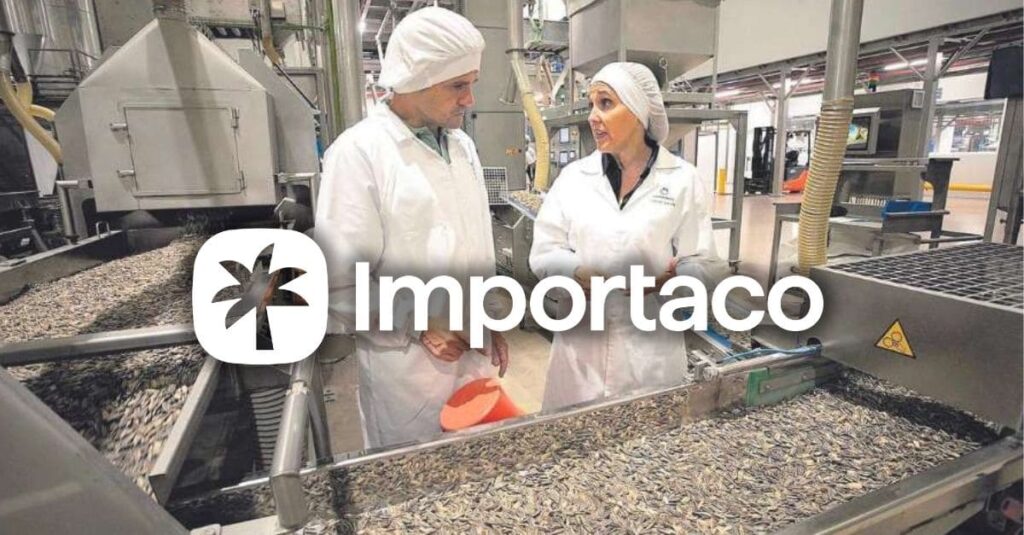
Importaco is an international food company specializing in the production of nuts and mineral water, and a national leader in both markets. It operates 17 manufacturing plants featuring advanced sorting, processing, packaging, and bottling operations, supported by exhaustive end-to-end quality control.
Having reliable, consistent data across plants is the foundation for managing operations, prioritizing improvement initiatives, and making decisions that deliver a real impact on productivity and waste reduction.
With that goal in mind, Importaco embarked on a clear path toward a more connected factory—reducing reliance on paper and manual processes, and seeking a platform to turn shop-floor data into a real-time management tool.
Before implementing MESView, the primary challenge was a lack of visibility. into what was happening on the shop floor at any given moment. Data was gathered manually manually, scattered, and often late or incomplete, making it difficult to effectively control performance and make timely operational decisions.
This situation particularly impacted critical KPIs:
Furthermore, Importaco already had prior experience with another MES system implemented in two of the group’s plants.
Although they had chosen a solution considered a ‘market leader,’ the outcome was a slow and expensive deployment due to high customization requirements, drawn-out project timelines, and high total costs (implementation and licensing).
The lesson was clear: to scale digitalization across new plants, they needed a different approach—one that was more agile and less dependent on endless custom development.
Importaco chose MESView in search of a functionally comprehensive and robust platform that was, above all, fast to deploy—without having to ‘reinvent the wheel’ through extensive customizations.
The implementation was designed as an orderly, phased rollout, kicking off with a pilot line. and was gradually expanded to the remaining lines. This approach allowed the team to quickly validate the system’s value, fine-tune KPIs with the staff, and ensure a solid rollout.
A particularly key milestone was the integration with SAP. Importaco highlighted the speed with which Exos developed the integration APIs, adapting to the existing interface and achieving stable operation from day one, with no notable issues.
Following the implementation, Importaco successfully turned shop-floor data into an operational tool, providing objective, accessible information in real time.. Today, they routinely track:
In terms of impact, Importaco highlights clear improvements:
With these results, Importaco reinforced its commitment to MESView as a lever for standardization and continuous improvement, with the goal of accelerating its rollout to more group plants and moving toward a more standardized, manageable operating model.
Conforme al RGPD y la LOPDGDD, EXOS Solutions S.L. tratará los datos facilitados, con la finalidad de contestar las dudas y/o quejas planteadas a través del presente formulario y facilitar la información solicitada. Siempre que nos lo autorice previamente, enviaremos información relacionada con los productos ofrecidos por EXOS Solutions S.L. Podrá ejercer, si lo desea, los derechos de acceso, rectificación, supresión, y demás reconocidos en la normativa mencionada. Para obtener más información acerca de cómo estamos tratando sus datos, acceda a nuestra política de privacidad.
(Su negativa a facilitarnos la autorización implicará la imposibilidad de tratar sus datos con la finalidad indicada).
Conforme al RGPD y la LOPDGDD, EXOS Solutions S.L. tratará los datos facilitados, con la finalidad de contestar las dudas y/o quejas planteadas a través del presente formulario y facilitar la información solicitada. Siempre que nos lo autorice previamente, enviaremos información relacionada con los productos ofrecidos por EXOS Solutions S.L. Podrá ejercer, si lo desea, los derechos de acceso, rectificación, supresión, y demás reconocidos en la normativa mencionada. Para obtener más información acerca de cómo estamos tratando sus datos, acceda a nuestra política de privacidad.
(Su negativa a facilitarnos la autorización implicará la imposibilidad de tratar sus datos con la finalidad indicada).
Conforme al RGPD y la LOPDGDD, EXOS Solutions S.L. tratará los datos facilitados, con la finalidad de contestar las dudas y/o quejas planteadas a través del presente formulario y facilitar la información solicitada. Siempre que nos lo autorice previamente, enviaremos información relacionada con los productos ofrecidos por EXOS Solutions S.L. Podrá ejercer, si lo desea, los derechos de acceso, rectificación, supresión, y demás reconocidos en la normativa mencionada. Para obtener más información acerca de cómo estamos tratando sus datos, acceda a nuestra política de privacidad.
(Su negativa a facilitarnos la autorización implicará la imposibilidad de tratar sus datos con la finalidad indicada).
Conforme al RGPD y la LOPDGDD, EXOS Solutions S.L. tratará los datos facilitados, con la finalidad de contestar las dudas y/o quejas planteadas a través del presente formulario y facilitar la información solicitada. Siempre que nos lo autorice previamente, enviaremos información relacionada con los productos ofrecidos por EXOS Solutions S.L. Podrá ejercer, si lo desea, los derechos de acceso, rectificación, supresión, y demás reconocidos en la normativa mencionada. Para obtener más información acerca de cómo estamos tratando sus datos, acceda a nuestra política de privacidad.
(Su negativa a facilitarnos la autorización implicará la imposibilidad de tratar sus datos con la finalidad indicada).
Conforme al RGPD y la LOPDGDD, EXOS Solutions S.L. tratará los datos facilitados, con la finalidad de contestar las dudas y/o quejas planteadas a través del presente formulario y facilitar la información solicitada. Siempre que nos lo autorice previamente, enviaremos información relacionada con los productos ofrecidos por EXOS Solutions S.L. Podrá ejercer, si lo desea, los derechos de acceso, rectificación, supresión, y demás reconocidos en la normativa mencionada. Para obtener más información acerca de cómo estamos tratando sus datos, acceda a nuestra política de privacidad.
(Su negativa a facilitarnos la autorización implicará la imposibilidad de tratar sus datos con la finalidad indicada).
In accordance with the GDPR and the LOPDGDD, EXOS Solutions S.L. will process the data provided in order to answer any questions and/or complaints raised through this form and to provide the requested information. Whenever you authorize us beforehand, we will send information related to the products offered by EXOS Solutions S.L. You may exercise, if you wish, the rights of access, rectification, deletion, and others recognized in the aforementioned regulations. For more information on how we are processing your data, please see our privacy policy.
(Your refusal to provide authorization will mean we cannot process your data for the stated purpose).

